

Chronic Kidney Disease (CKD): Symptoms and Causes
Chronic Kidney Disease (CKD) often develops silently as a result of uncontrolled diabetes or high blood pressure, eventually causing profound fatigue, noticeable fluid retention, and changes in your urinary habits. Because early-stage kidney dysfunction rarely presents obvious symptoms, consulting our board-certified professionals is critical for receiving the timely screenings and proactive treatments necessary to slow or halt the disease’s progression. Manage underlying risk factors and create a highly personalized care plan that protects your long-term renal health and overall vitality. For more information, contact us or request an appointment online. We are conveniently located at 5150 Crenshaw Rd, Suite A 150, Pasadena, TX 77505.
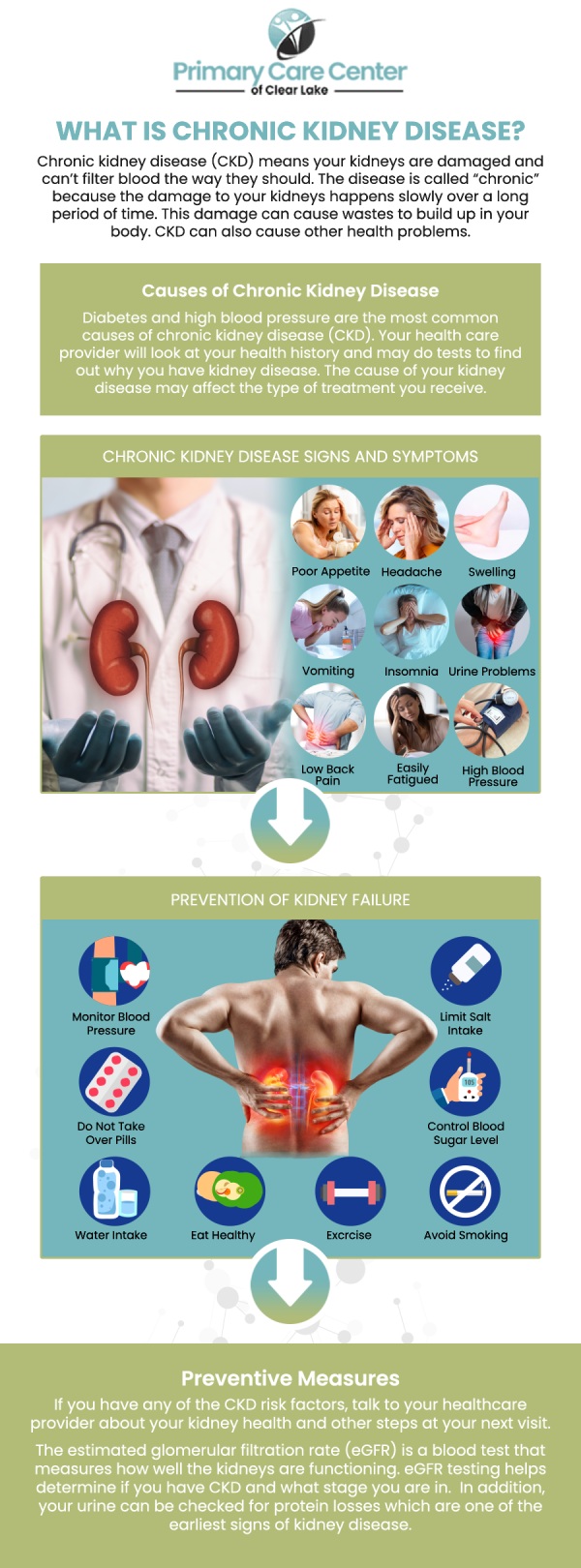
Table of Contents:
What does it feel like when something is wrong with your kidneys?
Is kidney disease hereditary?
Who is at risk for chronic kidney disease?
What are the complications of chronic kidney disease?
Chronic Kidney Disease Care: Dr. Niraj and Dr. Smriti Choudhary’s Approach to Managing Your Kidney Health
One of the most dangerous aspects of chronic kidney disease is its reputation as a “silent illness.” In the early stages of the disease, your kidneys are highly adaptable and can compensate for impaired function, meaning you might not feel anything wrong at all. However, as the damage progresses and waste begins to build up in your blood, several warning signs may emerge. You might experience a profound and persistent sense of fatigue, weakness, or trouble concentrating due to the accumulation of toxins. Another very common symptom is localized swelling—medically known as edema—which typically occurs in your feet, ankles, lower legs, or around your eyes. This happens because your failing kidneys can no longer efficiently remove excess fluid and sodium from your body. Additionally, you may notice changes in your urinary habits, such as needing to urinate more frequently (especially during the night) or having urine that appears foamy or contains blood. Other subtle signs include dry and itchy skin, unexplained muscle cramps, poor appetite, and persistent nausea. If you notice any of these symptoms, it is critical to schedule an evaluation at Primary Care of Clear Lake promptly.
Genetics play a significant and complex role in kidney health, meaning a family history can indeed impact your likelihood of developing renal issues. While not every form of kidney disease is strictly inherited, certain specific conditions are passed directly from parents to their children. The most prevalent of these is Polycystic Kidney Disease (PKD), a genetic disorder characterized by the growth of multiple fluid-filled cysts within the kidneys, which progressively enlarge the organs and diminish their function. Other less common hereditary conditions include Alport syndrome, which affects kidney blood vessels and can impact hearing, and Fabry disease. However, even if you do not inherit a specific kidney disorder, you can inherit a strong genetic predisposition to the primary causes of chronic kidney disease: diabetes and high blood pressure. If your parents or siblings have struggled with hypertension, type 2 diabetes, or chronic kidney failure, your own risk profile is inherently higher. At Primary Care of Clear Lake, we strongly emphasize the importance of discussing your complete family medical history with your provider so we can implement customized, early-screening protocols to safeguard your kidney function.
Understanding your personal risk factors for chronic kidney disease is the first crucial step toward effective prevention. While CKD can affect anyone, certain chronic medical conditions drastically increase your susceptibility. The two leading causes and most prominent risk factors are diabetes (both Type 1 and Type 2) and uncontrolled high blood pressure. Consistently elevated blood sugar can damage the delicate filters inside your kidneys, while hypertension puts immense strain on the kidney’s blood vessels. Additionally, individuals with a history of cardiovascular disease, obesity, or elevated cholesterol levels are at a significantly higher risk. Age is another vital component to consider; as we age, our kidneys naturally lose some of their functional capacity, making those over sixty particularly vulnerable to disease progression. Furthermore, statistics show that certain ethnic and racial groups—including African Americans, Hispanic Americans, Native Americans, and Asian Americans—have higher rates of diabetes and hypertension, thereby increasing their overall CKD risk. Lifestyle factors, such as smoking tobacco, maintaining a sedentary lifestyle, or the prolonged, heavy use of certain over-the-counter pain medications like NSAIDs, can also heavily compromise your kidney health over time.
When chronic kidney disease is left unmanaged, it can trigger a domino effect of severe complications that impact virtually every system in the human body. Because the kidneys are unable to filter out excess fluid effectively, patients often experience severe fluid retention. This can lead to persistent swelling in the arms and legs, dangerously elevated blood pressure, and a life-threatening accumulation of fluid in the lungs known as pulmonary edema. The kidneys are also responsible for producing erythropoietin, a hormone that signals the body to make red blood cells; a decline in this hormone frequently results in severe anemia. Cardiovascular disease is another major complication, standing as the leading cause of death among CKD patients. Furthermore, as the kidneys lose their ability to balance minerals, patients may suffer from hyperkalemia—a sudden and dangerous spike in potassium levels that can impair heart function. Bone disease is also common, as imbalances in calcium and phosphorus weaken the skeletal system. Ultimately, the most severe consequence is End-Stage Renal Disease (ESRD), requiring either lifelong dialysis or a kidney transplant for survival.
At Primary Care Center of Clear Lake, Dr. Niraj Choudhary, MD, and Dr. Smriti Choudhary, MD, provide comprehensive care for patients with chronic kidney disease (CKD), focusing on early detection and personalized management strategies. They understand that CKD can be a progressive condition, and their approach emphasizes slowing its progression through a combination of lifestyle changes, medication management, and ongoing monitoring.
Dr. Niraj and Dr. Smriti take the time to understand each patient’s unique health history, offering tailored treatment plans that include dietary recommendations, blood pressure control, and diabetes management. Their commitment to patient education and proactive care helps individuals with CKD maintain better kidney function and overall well-being. At Primary Care Center of Clear Lake, you’re not just a patient; you’re a partner in your care, supported by experienced doctors who are dedicated to your kidney health and long-term vitality. For more information, contact us or request an appointment online. We are conveniently located at 5150 Crenshaw Rd, Suite A 150, Pasadena, TX 77505. We serve patients from Pasadena TX, South Houston TX, Brookwood TX, Clear Lake TX, Baytown TX, and surrounding areas.
Check Out Our 5 Star Reviews


Additional Services We Offer
• 2D ECHO
• ABI Testing
• Obesity Medicine
• Alzheimer’s Disease
• Anxiety Disorder
• Aortic Aneurysm Screening
• Arthritis
• Asthma
• Body Composition Testing
• Cancer Screening
• Carotid Doppler
• Chronic Condition Management
• Chronic Kidney Disease
• Chronic Obstructive Pulmonary Disease
• Congestive Heart Failure
• COPD & Asthma
• Coronary Heart Disease
• COVID-19 Testing
• Dementia Screening
• Depression
• Diabetes Management
• EKG
• Food Allergies
• Food Sensitivity
• Geriatric Care
• Hypertension
• Wegovy HD
• Outdoor Allergies
• Parkinson’s Disease
• Primary Care
• Resting Metabolic Rate Testing
• Thyroid Scan
• Wellness Exams for Men
• Wellness Exams for Women
• Ozempic
• Integrative Medical Weight Loss
• Men’s Health
• Testosterone Replacement Therapy
• Erectile Dysfunction
• Testosterone Gel and Injections
• Women’s Health
• Menopause
• PCOS
• Hormone Replacement Therapy
• Individual Nutritional and Lifestyle Counselling
• Indoor Allergies
• Internal Medicine
• Lipid Disorders
• Medical Weight-Loss
• Osteoporosis
• Foundayo

Additional Services We Offer
• 2D ECHO
• ABI Testing
• Obesity Medicine
• Alzheimer’s Disease
• Anxiety Disorder
• Aortic Aneurysm Screening
• Arthritis
• Asthma
• Body Composition Testing
• Cancer Screening
• Carotid Doppler
• Chronic Condition Management
• Chronic Kidney Disease
• Chronic Obstructive Pulmonary Disease
• Congestive Heart Failure
• COPD & Asthma
• Coronary Heart Disease
• COVID-19 Testing
• Dementia Screening
• Depression
• Diabetes Management
• EKG
• Food Allergies
• Food Sensitivity
• Geriatric Care
• Hypertension
• Outdoor Allergies
• Parkinson’s Disease
• Primary Care
• Resting Metabolic Rate Testing
• Thyroid Scan
• Wellness Exams for Men
• Wellness Exams for Women
• Ozempic
• Integrative Medical Weight Loss
• Men’s Health
• Testosterone Replacement Therapy
• Erectile Dysfunction
• Testosterone Gel and Injections
• Women’s Health
• Menopause
• PCOS
• Hormone Replacement Therapy
• Individual Nutritional and Lifestyle Counselling
• Indoor Allergies
• Internal Medicine
• Lipid Disorders
• Medical Weight-Loss
• Osteoporosis
• Foundayo
• Wegovy HD


 Send Text
 How May I Help You?