

Chronic Kidney Disease (CKD) Care with Board-Certified Providers in Pasadena TX
Receiving care from board-certified providers ensures you have compassionate guidance while navigating the complexities of Chronic Kidney Disease (CKD) at any stage. At Primary Care Center of Clear Lake, our board-certified internal medicine and obesity medicine physicians, Dr. Smriti Choudhary, M.D., and Dr. Niraj Choudhary, M.D., utilize the latest evidence-based treatments and comprehensive monitoring protocols to actively manage your symptoms, protect your remaining kidney function, and prevent severe complications. For more information, contact us or request an appointment online. We are conveniently located at 5150 Crenshaw Rd, Suite A 150, Pasadena, TX 77505.
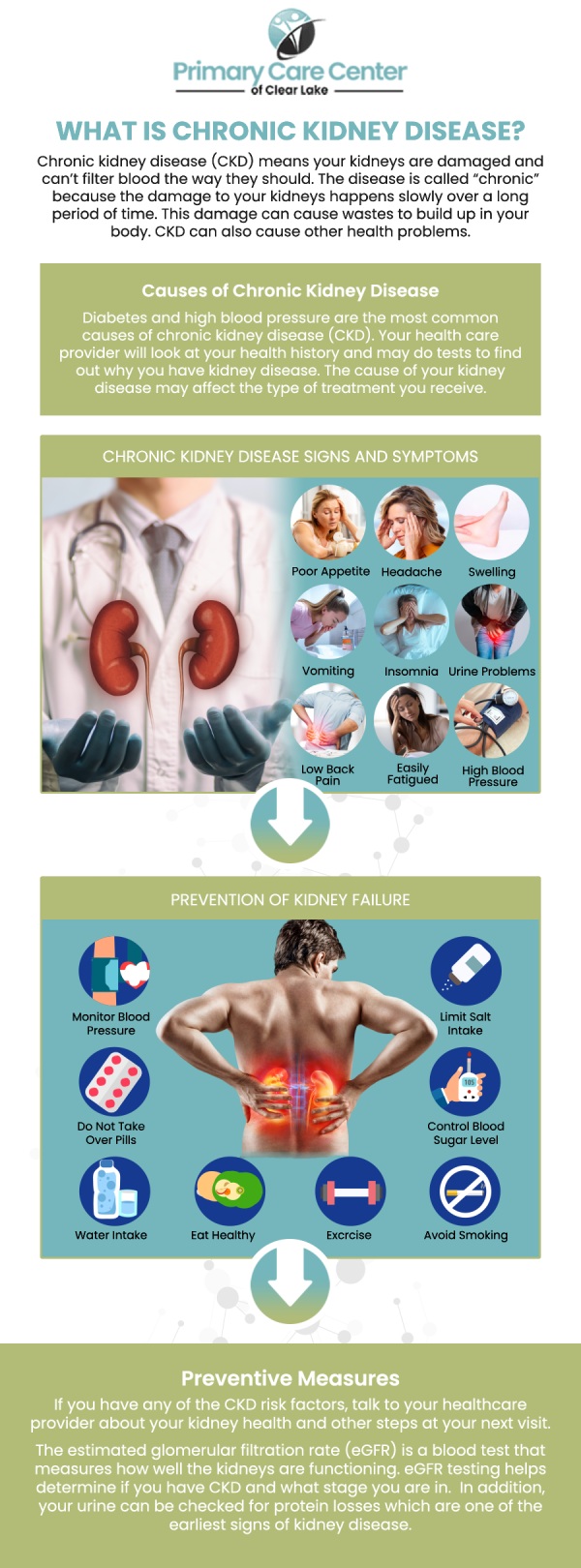
Table of Contents:
What can I expect if I have kidney disease?
Can kidney disease be prevented?
How long can someone live with chronic kidney disease?
How do you know if your kidneys are struggling?
What color is urine when your kidneys are failing?
How Does Primary Care Center of Clear Lake Support Chronic Kidney Disease Care?
At Primary Care of Clear Lake, we are dedicated to providing compassionate, evidence-based care for patients managing chronic conditions. Understanding your kidney health is essential, and we are here to provide clear, honest answers to help you navigate your journey.
Receiving a diagnosis of kidney disease can understandably feel daunting, but knowing exactly what to expect empowers you to take control of your health. Your daily experience will largely depend on the current stage of your condition. In the early stages, you can expect life to continue mostly as normal, though with a renewed focus on proactive health management. You will need to attend regular appointments with our board-certified providers in Pasadena, TX, to carefully monitor your kidney function through routine blood and urine tests. Treatment will heavily emphasize immediate lifestyle modifications, such as adopting a kidney-friendly diet low in sodium, managing your blood pressure, and strictly controlling blood sugar levels. As the disease progresses over time, you may need to introduce specific medications to handle complications like anemia or severe fluid retention. If you reach advanced stages, you can expect more intensive medical interventions, potentially including discussions about dialysis. While the condition is chronic, a diagnosis is not a pause button on your life. With strict adherence to your personalized care plan, you can actively slow the disease’s progression and maintain your quality of life.
While you cannot alter certain inherited genetic predispositions, the most common forms of chronic kidney disease are largely preventable or can be significantly delayed. Prevention centers almost entirely on aggressively managing the two leading causes of kidney failure: high blood pressure and type 2 diabetes. By keeping your blood pressure within a healthy range and strictly managing your blood sugar levels, you drastically reduce the physical strain placed on your kidneys’ delicate filtering systems. You can actively prevent renal damage by adopting a proactive, heart-healthy lifestyle. This includes maintaining a balanced diet rich in fresh vegetables, exercising regularly to maintain a healthy weight, and firmly avoiding tobacco products, which severely damage renal blood vessels. Furthermore, it is crucial to use over-the-counter pain medications, specifically NSAIDs like ibuprofen, sparingly, as chronic, heavy use can cause acute kidney injury. Above all, regular health screenings are your most powerful preventive tool. By visiting our clinic for routine physicals, our providers can catch early warning signs—such as elevated blood pressure or trace proteins in your urine—long before permanent, irreversible kidney damage actually occurs.
It is completely natural to worry about your life expectancy after receiving a chronic kidney disease diagnosis. The straightforward truth is that there is no single timeline; life expectancy varies dramatically depending on your age, the specific stage at which you were diagnosed, and how well you manage your underlying health conditions. Many individuals diagnosed in the early stages (Stages 1 through 3) live long, full, and active lives without ever progressing to complete kidney failure. By diligently adhering to a prescribed treatment plan, controlling your blood pressure, and making targeted dietary changes, you can effectively stall the disease’s progression for decades. Even if the disease eventually advances to Stage 5, requiring dialysis or a kidney transplant, modern medicine offers incredibly robust life-sustaining options. Patients can live for many years on dialysis, and those who receive a successful kidney transplant often enjoy a significantly extended lifespan. The absolute most critical factor determining your longevity with CKD is your commitment to ongoing medical care. Partnering with our board-certified providers ensures complications are managed swiftly, giving you the best possible outlook for the future.
Identifying struggling kidneys on your own can be incredibly difficult because the organs are highly resilient and adaptable. In the early stages of kidney dysfunction, you will likely experience absolutely no physical symptoms, making routine lab work at your primary care clinic absolutely vital for detection. However, when your kidneys do begin to struggle significantly, the buildup of waste products and excess fluid in your bloodstream will trigger noticeable, systemic changes. You might experience a profound, unexplainable fatigue or a persistent “brain fog” that makes it difficult to concentrate during the day. One of the most prominent physical indicators is edema, which presents as swelling in your ankles, feet, legs, or puffiness around your eyes, caused by severe fluid retention. You may also notice sudden changes in your bathroom habits, such as waking up multiple times during the night to urinate. Other common warning signs of struggling kidneys include severe muscle cramps, persistently dry and itchy skin, or a sudden loss of appetite. If you recognize any of these symptoms, it is critical to schedule an evaluation with our medical team immediately.
Changes in your urine can be one of the most highly visible indicators that your kidneys are in distress, though it is important to understand that urine color alone does not definitively confirm kidney failure. When kidneys begin to fail, they lose their ability to properly filter waste and retain essential proteins and blood cells. If you notice that your urine is dark, resembling the color of tea or cola, this can indicate a severe lack of hydration or the presence of old blood in your urinary tract. Urine that appears pink, red, or distinctly bloody is a major warning sign that your kidney filters have been structurally damaged, allowing red blood cells to leak through. Beyond the color, the texture of your urine is also highly revealing. If your urine consistently looks excessively bubbly or foamy—often requiring multiple flushes to clear—it is a strong indicator of proteinuria, meaning vital proteins like albumin are spilling out of your damaged kidneys. While minor fluctuations in urine color are often harmless, persistent dark, bloody, or foamy urine requires immediate medical testing.
At Primary Care Center of Clear Lake, board‑certified providers like Dr. Niraj Choudhary, MD and Dr. Smriti Choudhary, MD deliver personalized care for patients with chronic kidney disease (CKD). Their team focuses on early detection, symptom monitoring, and ongoing management to help slow disease progression and maintain overall health. Through routine lab tests, careful symptom tracking, and tailored treatment plans, they work to preserve kidney function and enhance your quality of life. Lifestyle guidance, dietary counseling, and coordination with specialists are part of their comprehensive approach to managing CKD and its related health challenges close to home. For more information, contact us or request an appointment online. We are conveniently located at 5150 Crenshaw Rd, Suite A 150, Pasadena, TX 77505. We serve patients from Pasadena TX, South Houston TX, Brookwood TX, Clear Lake TX, Baytown TX, and surrounding areas.
Check Out Our 5 Star Reviews


Additional Services We Offer
• 2D ECHO
• ABI Testing
• Obesity Medicine
• Alzheimer’s Disease
• Anxiety Disorder
• Aortic Aneurysm Screening
• Arthritis
• Asthma
• Body Composition Testing
• Cancer Screening
• Carotid Doppler
• Chronic Condition Management
• Chronic Kidney Disease
• Chronic Obstructive Pulmonary Disease
• Congestive Heart Failure
• COPD & Asthma
• Coronary Heart Disease
• COVID-19 Testing
• Dementia Screening
• Depression
• Diabetes Management
• EKG
• Food Allergies
• Food Sensitivity
• Geriatric Care
• Hypertension
• Wegovy HD
• Outdoor Allergies
• Parkinson’s Disease
• Primary Care
• Resting Metabolic Rate Testing
• Thyroid Scan
• Wellness Exams for Men
• Wellness Exams for Women
• Ozempic
• Integrative Medical Weight Loss
• Men’s Health
• Testosterone Replacement Therapy
• Erectile Dysfunction
• Testosterone Gel and Injections
• Women’s Health
• Menopause
• PCOS
• Hormone Replacement Therapy
• Individual Nutritional and Lifestyle Counselling
• Indoor Allergies
• Internal Medicine
• Lipid Disorders
• Medical Weight-Loss
• Osteoporosis
• Foundayo

Additional Services We Offer
• 2D ECHO
• ABI Testing
• Obesity Medicine
• Alzheimer’s Disease
• Anxiety Disorder
• Aortic Aneurysm Screening
• Arthritis
• Asthma
• Body Composition Testing
• Cancer Screening
• Carotid Doppler
• Chronic Condition Management
• Chronic Kidney Disease
• Chronic Obstructive Pulmonary Disease
• Congestive Heart Failure
• COPD & Asthma
• Coronary Heart Disease
• COVID-19 Testing
• Dementia Screening
• Depression
• Diabetes Management
• EKG
• Food Allergies
• Food Sensitivity
• Geriatric Care
• Hypertension
• Outdoor Allergies
• Parkinson’s Disease
• Primary Care
• Resting Metabolic Rate Testing
• Thyroid Scan
• Wellness Exams for Men
• Wellness Exams for Women
• Ozempic
• Integrative Medical Weight Loss
• Men’s Health
• Testosterone Replacement Therapy
• Erectile Dysfunction
• Testosterone Gel and Injections
• Women’s Health
• Menopause
• PCOS
• Hormone Replacement Therapy
• Individual Nutritional and Lifestyle Counselling
• Indoor Allergies
• Internal Medicine
• Lipid Disorders
• Medical Weight-Loss
• Osteoporosis
• Foundayo
• Wegovy HD


 Send Text
 How May I Help You?