

What Is the Difference Between HDL Cholesterol and LDL Cholesterol?
HDL and LDL are the primary types of cholesterol in your blood, each playing a different role in your heart health. LDL, often referred to as “bad” cholesterol, can accumulate in your arteries, leading to plaque buildup, while HDL, or “good” cholesterol, helps remove excess cholesterol from your blood and carries it back to your liver. Maintaining a healthy cholesterol balance is crucial, as high LDL levels can increase the risk of heart disease. Dr. Smriti Choudhary, M.D., and Dr. Niraj Choudhary, M.D., at Primary Care Center of Clear Lake, provide personalized care to help patients understand their cholesterol levels and reduce their risk of heart-related health issues. For more information, please contact us or schedule an appointment online. We are conveniently located at 13920 Osprey Ct, Suite C, Webster, TX 77598.
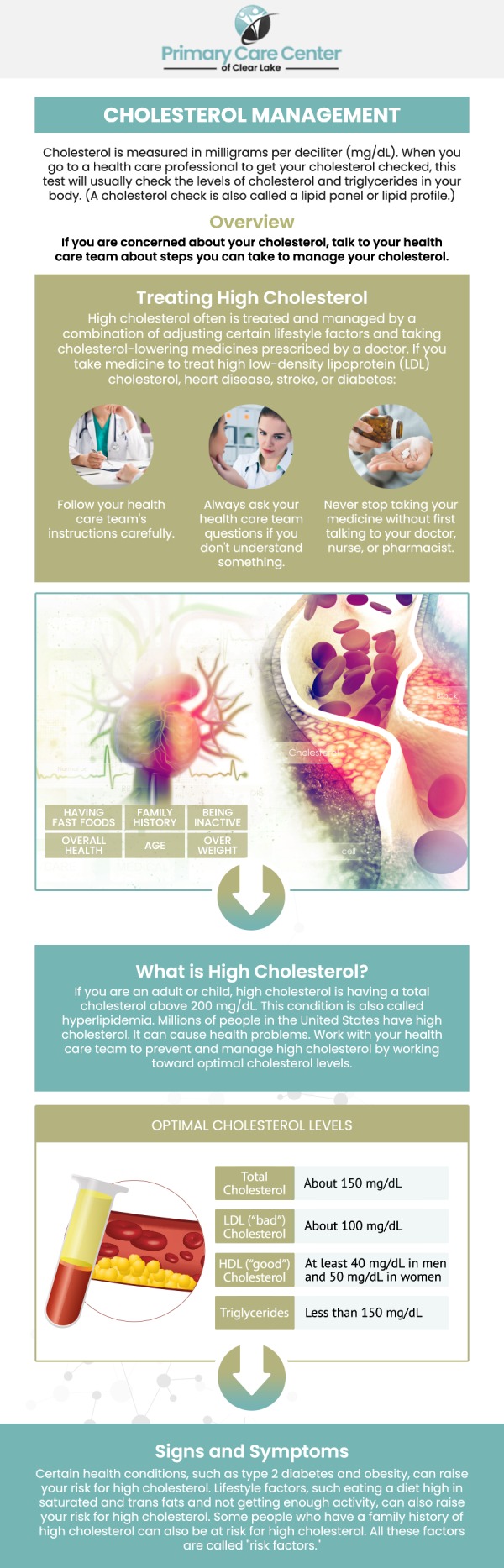
Table of Contents:
Which is more important, HDL or LDL cholesterol?
What is the normal range for HDL and LDL?
Which is bad, triglycerides or LDL?
What is the danger zone for LDL?
Understanding HDL and LDL Cholesterol: Personalized Care at Primary Care Center of Clear Lake
LDL cholesterol is often called “bad” cholesterol because high levels can lead to plaque buildup in your arteries. This increases your risk for heart disease and stroke—two conditions we work hard to help our Clear Lake community prevent. HDL cholesterol, on the other hand, is known as “good” cholesterol. It acts like a cleanup crew, carrying excess cholesterol away from your arteries and back to your liver, where your body can process and remove it.
Our experienced providers at Primary Care Center of Clear Lake focus on the balance between HDL and LDL, not just the individual numbers. Ideally, you want to keep LDL low and HDL high. Too much LDL or too little HDL can both put your heart at risk. That’s why we often look at the ratio of your total cholesterol to HDL, or LDL to HDL, as a more accurate way to assess your risk for heart disease.
How Can You Improve Your Cholesterol?
During your visits, we’ll discuss practical steps you can take—like improving your diet, exercising regularly, and quitting smoking—to help lower LDL and raise HDL. These lifestyle changes, along with regular monitoring, are essential parts of our approach to cardiovascular disease prevention.
HDL (High-Density Lipoprotein): Often called “good” cholesterol, HDL helps remove excess cholesterol from your bloodstream, reducing your risk of heart disease. For men, a healthy HDL level is 40 mg/dL or higher; for women, 50 mg/dL or higher is preferred. Higher HDL levels are beneficial for your heart health.
LDL (Low-Density Lipoprotein): Known as “bad” cholesterol, LDL can build up in your blood vessels, increasing your risk for heart attack and stroke. Ideally, LDL levels should be less than 100 mg/dL. Levels above this range indicate a higher risk and may require medical attention and lifestyle changes.
Personalized Care:
Our team at Primary Care Center of Clear Lake understands that cholesterol goals can vary based on your personal health history, age, and other risk factors such as diabetes, high blood pressure, or family history of heart disease. That’s why we offer individualized guidance and support. During your visit, we’ll review your lab results together, discuss your risk factors, and, if needed, develop a treatment plan that may include dietary counseling, exercise recommendations, and medication management.
LDL cholesterol—often called “bad cholesterol”—can build up in your arteries, leading to blockages that may cause heart attacks or strokes. That’s why we focus on keeping your LDL levels within a healthy range, especially if you have additional risk factors like high blood pressure, diabetes, or a family history of heart disease.
Triglycerides are another type of fat found in your blood. After you eat, any extra calories your body doesn’t need right away are stored as triglycerides. High levels can increase your risk for heart disease, especially when combined with other conditions like obesity, diabetes, or metabolic syndrome. Very high triglycerides can also raise your risk for pancreatitis.
For most people, controlling LDL cholesterol is the primary goal. However, if your triglycerides are very high, it’s important to address that as well. At Primary Care Center of Clear Lake, we look at your complete health profile—including your lifestyle, family history, and other risk factors—to decide what your focus should be.
What Can You Do?
Whether it’s LDL cholesterol or triglycerides, both can often be managed with:
• Regular physical activity
• A heart-healthy diet (low in saturated fat, sugar, and refined carbs)
• Maintaining a healthy weight
• Avoiding tobacco
How We Can Help
During your visits to Primary Care Center of Clear Lake, we’ll monitor your cholesterol and triglyceride levels, discuss your personal risk factors, and work with you to develop a plan that supports your long-term heart health.
LDL cholesterol is measured in milligrams per deciliter (mg/dL) of blood. According to clinical guidelines:
• Below 100 mg/dL: Optimal for most healthy adults
• 100–129 mg/dL: Near or above optimal
• 130–159 mg/dL: Borderline high
• 160–189 mg/dL: High (the “danger zone” begins here)
• 190 mg/dL and above: Very high risk
If your LDL cholesterol is 160 mg/dL or higher, you are in the danger zone for cardiovascular disease. This risk is even greater if you have other risk factors such as high blood pressure, diabetes, smoking, or a family history of heart disease.
How can the Primary Care Center of Clear Lake help?
Our experienced healthcare team is here to partner with you in lowering your LDL cholesterol and improving your heart health. We offer:
• Personalized risk assessments using the latest guidelines and diagnostic tools
• Lifestyle counseling to help you adopt a heart-healthy diet and increase physical activity
• Support for quitting smoking
• Medication management when lifestyle changes alone are not enough
• Regular cholesterol monitoring and follow-up care
At Primary Care Center of Clear Lake, Dr. Smriti Choudhary, M.D., and Dr. Niraj Choudhary, M.D., are dedicated to helping patients understand the importance of cholesterol levels in maintaining heart health. HDL (High-Density Lipoprotein), often referred to as “good cholesterol,” helps remove excess cholesterol from the bloodstream, while LDL (Low-Density Lipoprotein), or “bad cholesterol,” can lead to plaque buildup in arteries, increasing the risk of heart disease. By providing personalized care and cholesterol management strategies, Dr. Choudhary and Dr. Choudhary focus on educating patients and offering tailored treatment plans that align with individual health needs. Regular check-ups, lifestyle modifications, and targeted interventions ensure that each patient achieves optimal heart health. For more information, please contact us or schedule an appointment online. We are conveniently located at 13920 Osprey Ct, Suite C, Webster, TX 77598. We serve patients from Webster TX, Bacliff TX, Dickinson TX, Seabrook TX, League City TX, Clear Lake City TX, and surrounding areas.
Check Out Our 5 Star Reviews


Additional Services We Offer
• 2D ECHO
• ABI Testing
• Obesity Medicine
• Alzheimer’s Disease
• Anxiety Disorder
• Aortic Aneurysm Screening
• Arthritis
• Asthma
• Body Composition Testing
• Cancer Screening
• Carotid Doppler
• Chronic Condition Management
• Chronic Kidney Disease
• Chronic Obstructive Pulmonary Disease
• Congestive Heart Failure
• COPD & Asthma
• Coronary Heart Disease
• COVID-19 Testing
• Dementia Screening
• Depression
• Diabetes Management
• EKG
• Food Allergies
• Food Sensitivity
• Geriatric Care
• Hypertension
• Wegovy HD
• Outdoor Allergies
• Parkinson’s Disease
• Primary Care
• Resting Metabolic Rate Testing
• Thyroid Scan
• Wellness Exams for Men
• Wellness Exams for Women
• Ozempic
• Integrative Medical Weight Loss
• Men’s Health
• Testosterone Replacement Therapy
• Erectile Dysfunction
• Testosterone Gel and Injections
• Women’s Health
• Menopause
• PCOS
• Hormone Replacement Therapy
• Individual Nutritional and Lifestyle Counselling
• Indoor Allergies
• Internal Medicine
• Lipid Disorders
• Medical Weight-Loss
• Osteoporosis
• Foundayo
• Flu Shot

Additional Services We Offer
• 2D ECHO
• ABI Testing
• Obesity Medicine
• Alzheimer’s Disease
• Anxiety Disorder
• Aortic Aneurysm Screening
• Arthritis
• Asthma
• Body Composition Testing
• Cancer Screening
• Carotid Doppler
• Chronic Condition Management
• Chronic Kidney Disease
• Chronic Obstructive Pulmonary Disease
• Congestive Heart Failure
• COPD & Asthma
• Coronary Heart Disease
• COVID-19 Testing
• Dementia Screening
• Depression
• Diabetes Management
• EKG
• Food Allergies
• Food Sensitivity
• Geriatric Care
• Hypertension
• Outdoor Allergies
• Parkinson’s Disease
• Primary Care
• Resting Metabolic Rate Testing
• Thyroid Scan
• Wellness Exams for Men
• Wellness Exams for Women
• Ozempic
• Integrative Medical Weight Loss
• Men’s Health
• Testosterone Replacement Therapy
• Erectile Dysfunction
• Testosterone Gel and Injections
• Women’s Health
• Menopause
• PCOS
• Hormone Replacement Therapy
• Individual Nutritional and Lifestyle Counselling
• Indoor Allergies
• Internal Medicine
• Lipid Disorders
• Medical Weight-Loss
• Osteoporosis
• Foundayo
• Wegovy HD
• Flu Shot


 Send Text
 How May I Help You?